

How to Spec Built-In Grills and Appliances for Client Outdoor Kitchens

Spec Built-In Grills and Appliances for Client Projects
Choosing the right built-in grill and appliances is one of the most important decisions on any outdoor kitchen project. For contractors and designers, getting the specs right protects your timeline and budget while delivering a kitchen the client will love. This guide walks through how to spec built-in components for client builds.
Quick Answer: Speccing Appliances
- Match grill size and BTU output to how the client actually cooks
- Pull exact cutout and clearance specs before framing
- Coordinate fuel type, ventilation, and matching accessories early
Key point: Always order from the manufacturer's current spec sheet, since cutout dimensions can change between model years.
Size the Grill to the Client's Needs
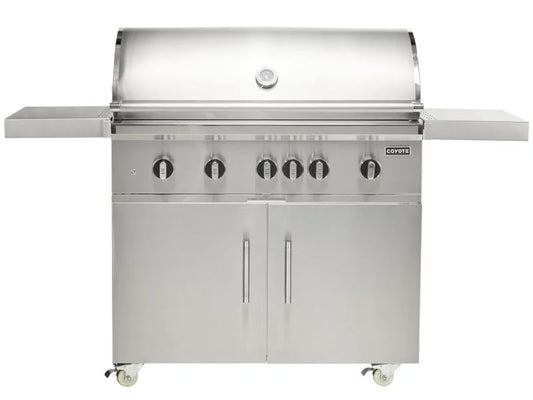
Start by asking how the client entertains. A family that cooks for a crowd needs more grilling surface and burners than a couple grilling weeknight dinners. Match the grill width, burner count, and BTU output to real usage, and leave room in the layout for the side burners, warming drawers, or refrigeration they want.
Nominal Size Is Not the Cutout: A 36" Example
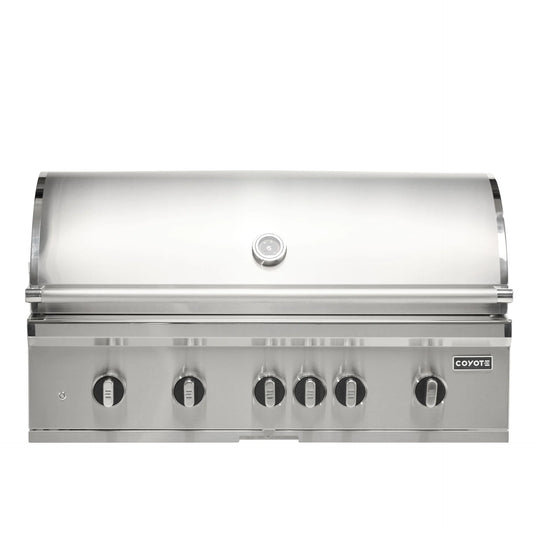
A grill's advertised size is not the size of the hole it needs. Among the 36" heads in our built-in grill cutout dimensions reference, the published cutout width runs from 32.5" to 36.75", a spread of more than four inches across models that all call themselves 36 inches (Width × Height × Depth, in inches, sorted by width):
| Model | Nominal size | Cutout W × H × D |
|---|---|---|
| Coyote CL Series C3CL36 / SL Series C3SL36NG | 36" | 32.5 × 10.25 × 20.5 |
| AMG Atlas ATS36-B | 36" | 34.0 × 10.0 × 19.75 |
| Artisan Professional 36" | 36" | 34.5 × 11.5 × depth not published |
| AMG Estate EST36 | 36" | 34.75 × 10.25 × 21.625 |
| AMG Muscle hybrid MUS36 | 36" | 35.0 × 15.0 × 25.0 |
| American Outdoor Grills AOG36TN / AOG36TP | 36" | 36.75 × 8.5 × 19.5 |
Height varies just as much: 8.5" for the AOG heads against 15.0" for the MUS36 hybrid, which carries a charcoal and wood tray. Depth is the figure most likely to catch you out, because brands do not measure it the same way, so a depth figure is not transferable between brands. The practical rule: choose the exact model first, then design the island around that model's published cutout. If the island already exists, work the other way round with the replacement built-in grill cutout finder, which starts from the opening you have. These figures are for planning and shortlisting; confirm every one against the manufacturer's current installation manual before cutting.
Confirm Cutout Dimensions and Clearances
Every built-in appliance has a required rough opening plus combustible and non-combustible clearance specs. Pull these from the current manufacturer spec sheet and build the island to match. Account for insulated jackets where required, especially when the grill sits near combustible surfaces.
Treat a liner or insulated jacket as its own component with its own, larger cutout. On our cutout reference, the AOG 36" grill needs a 36.75" wide opening, while its 36-IL-C liner needs 40.625 × 9.0 × 21.625, nearly four inches wider. Liners are also model-specific: order by model number, never by width alone. Whether a liner is required is set by the grill's installation manual and local code; see Do You Need an Insulating Grill Liner? for how to check. If you need a manual or spec sheet for a model we carry, call us on 843-212-7209 or use our request a quote page.
Coordinate Fuel, Ventilation, and Accessories
Confirm the fuel type early: natural gas requires a plumbed line, while propane needs a tank enclosure with proper ventilation. If the kitchen is under a roof or structure, plan for a vent hood. Spec matching access doors, drawers, and trim from the same line so the finished island looks cohesive and the components fit together cleanly.
Frequently Asked Questions
What grill size should I spec for a client? Match the cooking surface and BTU output to how often and for how many people they cook, then leave layout space for accessories.
Why pull the current spec sheet? Manufacturers occasionally revise cutout dimensions between model years, and building to an outdated spec can cause expensive fit problems.
Does an insulating liner change the cutout? Yes. If the manual calls for a liner, build the opening to the liner's published cutout, not the grill's. The liner table on our cutout dimensions page lists both figures for the models where they are published.
Related Reading
- A Contractor's Guide to Designing Outdoor Kitchens for Clients
- Built-In vs. Freestanding Grills: Which Is Right for Your Outdoor Kitchen?
- Best Materials for an Outdoor Kitchen: Stone, Stainless & Countertops
- 304 vs 443 Stainless Steel: Which Is Better for Outdoor Grills?
Browse our built-in grills and side burners to spec your next outdoor kitchen project.