

Direct vs. Indirect Heat Grilling: A Complete Guide

Knowing when to cook directly over the flame and when to cook beside it is the most useful skill in outdoor cooking. With both methods you can sear a steak, roast a whole chicken and cook ribs on the same grill.
Quick answer: direct vs indirect heat
- Direct heat: food sits right over the burner or coals. Hot and fast — for searing and quick-cooking foods.
- Indirect heat: food sits beside the heat with the lid closed, so the grill works like an oven. Gentle and even — for large or thick cuts.
Rule of thumb: thin, quick-cooking foods go direct; large or thick cuts go indirect.
What is direct heat grilling?
Direct heat means cooking right above the heat source, whether a gas burner or a bed of hot charcoal. Temperatures are high and food cooks quickly, building a browned crust.
Good for direct heat: burgers, steaks, chops, sausages, vegetables — generally anything under about 3/4 inch thick that cooks in 20 minutes or less.
What is indirect heat grilling?
Indirect heat means placing food away from the active flame and closing the lid so heat circulates around it. It cooks large cuts through without burning the outside.
Good for indirect heat: whole chickens, roasts, ribs, brisket and thick cuts that need more than about 25 minutes.
How to set up a two-zone fire
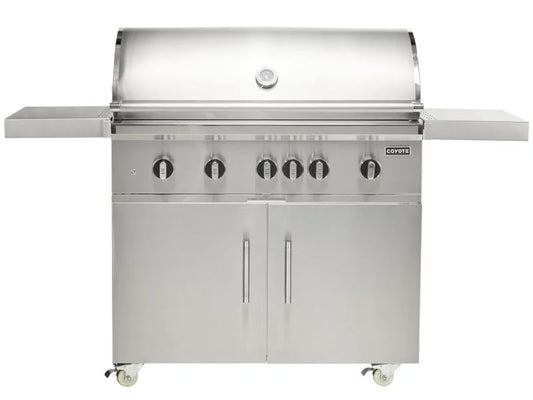
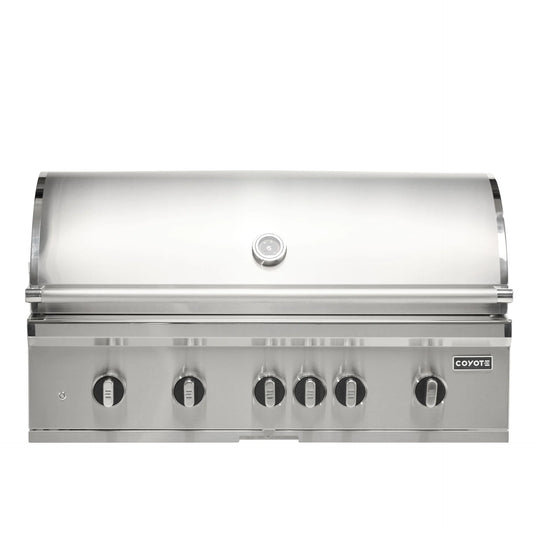
A two-zone fire gives you both at once: one side hot for direct heat, one side cooler for indirect. On a gas grill, light the burners on one side only. On charcoal, bank the coals to one side. Sear over the hot zone, then move food to the cool zone to finish. Grills with separately controlled burners and heat zone separators make this easier — compare burner layouts in our built-in grills.
Frequently asked questions
Should I grill with the lid open or closed?
Open for quick direct cooking; closed for indirect cooking so the grill holds heat like an oven.
Can I use both methods on one cut?
Yes. The reverse sear cooks a thick steak over indirect heat first, then finishes it with a quick sear over direct heat. See the reverse sear method explained.