

Natural Gas vs. Liquid Propane Grills: How to Choose the Right Fuel

Natural gas or liquid propane is one of the first decisions when you buy a serious grill, and it shapes where the grill can go and what each cookout costs. Most built-in and cart grills we carry are sold as separate natural gas (NG) and liquid propane (LP) versions, so the choice is made when you order.
The short answer
If you already have a natural gas line at the house and the grill will live in one place, choose natural gas: no tanks to swap, and piped gas is usually cheaper to run. If you want the grill to go anywhere, or running a gas line is not practical, choose propane. Both cook the same way — the difference is convenience, running cost and installation.
How the two fuels differ
Natural gas grills
A natural gas grill connects to your home's gas supply, the same utility line that may feed a furnace or water heater. Once a line is run to the grill, the supply is continuous. The trade-off is that the grill is fixed near the connection, and a plumber or gas fitter usually has to run the line.
Liquid propane grills
A propane grill runs from a refillable tank, most commonly a 20 lb cylinder. There is nothing to plumb, so a propane cart can go almost anywhere. You do have to watch the fuel level and keep a spare tank, and refills usually cost more per cookout than piped gas.
Why a grill is built for one fuel or the other
Propane carries roughly two and a half times as much energy per cubic foot as natural gas, and the two are delivered at different pressures. That is why each version of a grill has its own burner orifices and regulator, and why you order the version that matches your gas supply.
Running cost and installation
Natural gas generally wins on running cost because it is billed with the rest of your home energy. Propane has no installation cost. With natural gas you pay once to have the line run — the price depends on the distance and on your house, so get a quote from a licensed gas fitter — and then pay less per cookout. If you grill often, that usually favors natural gas; if you grill occasionally, propane's simplicity may matter more.
Where the grill will live
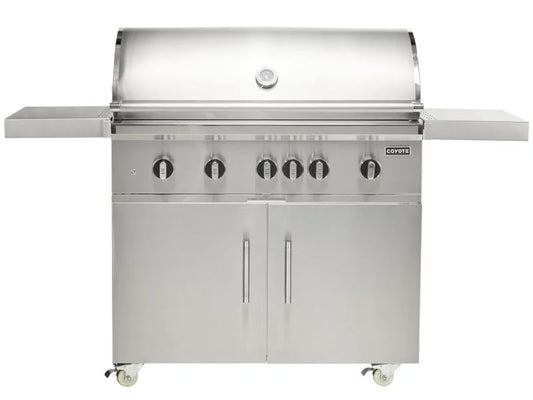
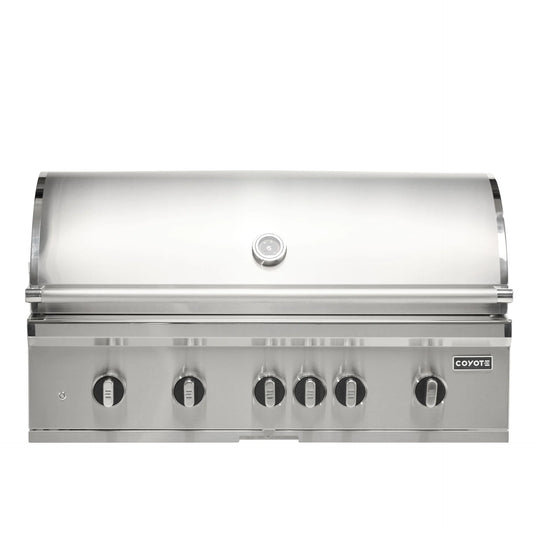
This often decides it for you. A built-in grill in an outdoor kitchen is a permanent installation, which is why so many islands are plumbed for natural gas built-in grills. Propane built-in grills are the answer where no gas line reaches the island — but read the manual first, because manufacturers set specific rules for storing a propane tank inside an island enclosure, including ventilation. For a grill you want to move, a propane cart grill keeps your options open; natural gas cart grills suit a fixed patio spot with a gas connection.
Can you convert a grill from one fuel to the other?
Sometimes, but it is not a casual swap. Conversion changes orifices and gas pressure and, on most brands, must be done with the manufacturer's parts by a qualified technician. Some manufacturers supply a conversion kit; others treat the fuel as fixed at the factory. Doing it wrong can void the warranty. The simplest path is to buy the version that matches the fuel you will use.
Quick decision checklist
- Do you already have, or plan to run, a gas line to the grill area? Natural gas is likely the better long-term value.
- Do you want to move the grill, or avoid any plumbing? Propane.
- Is this a permanent built-in or island? Natural gas usually fits best, if a line can reach it.
- Do you grill often and want the lowest cost per cookout? Natural gas usually pays back over time.
Still not sure?
Our FAQ pages answer the common questions for each fuel: natural gas built-in grills, propane built-in grills and natural gas and propane grills. Or call us at 843-212-7209 with the model you are considering and where it will go.