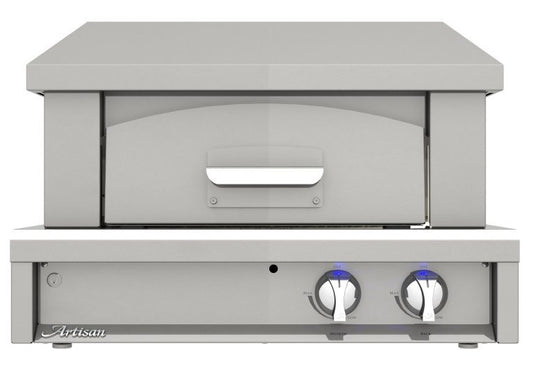
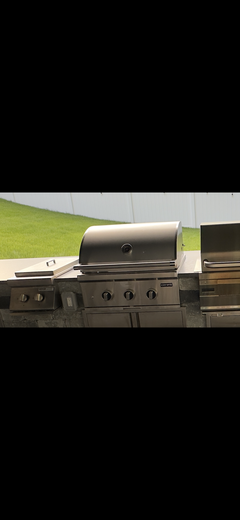
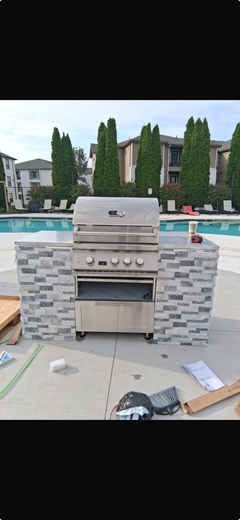
Start with installation, because it eliminates most of the range immediately. A built-in oven becomes part of a masonry or stainless island and usually vents at counter level, so it only makes sense if the kitchen is being built or rebuilt around it. A countertop oven is the same appliance standing on an existing counter or on a cart, which is the right answer when you are adding pizza to a patio rather than constructing a kitchen. A kamado insert is a different proposition again: if you already own a ceramic charcoal grill, an insert turns it into a pizza oven for a few hundred dollars instead of several thousand.
Then fuel. Gas ovens are configured for natural gas or propane at the factory and are not field-convertible, so a natural gas oven needs a line run to it before it is installed. Hybrid multi-fuel ovens give you gas on a weeknight and wood when you want the flavour, at the cost of managing a fire. Kamado inserts simply use the charcoal fire already in the grill.
Performance comes down to stored heat rather than headline temperature. A thick ceramic or refractory hearth is what keeps cooking the underside of the crust the moment a cold, wet pizza lands on it, and a hot ceiling is what finishes the top in the same two or three minutes. That combination is the reason a dedicated oven beats a covered grill with a stone in it, and it is also why preheat times are worth comparing.
Two practical details get overlooked. Door opening height varies more between ovens than cooking area does, and it determines what you can physically get in and out, so measure your peel and any cast iron against it. And a gas oven running above 1,000 degrees Fahrenheit has specified clearances to combustible construction, which need confirming against the manufacturer's current drawing before an island is framed rather than afterwards.