

How to Build an Outdoor Kitchen Island: A Complete Guide

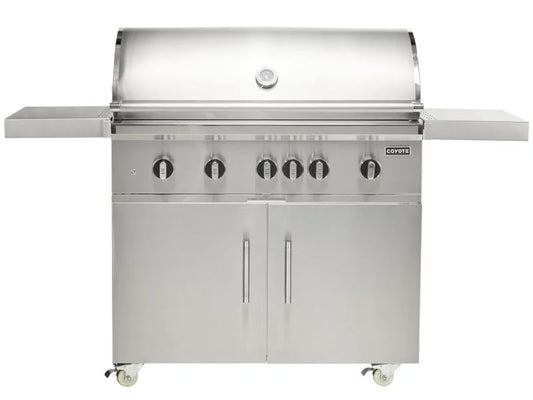
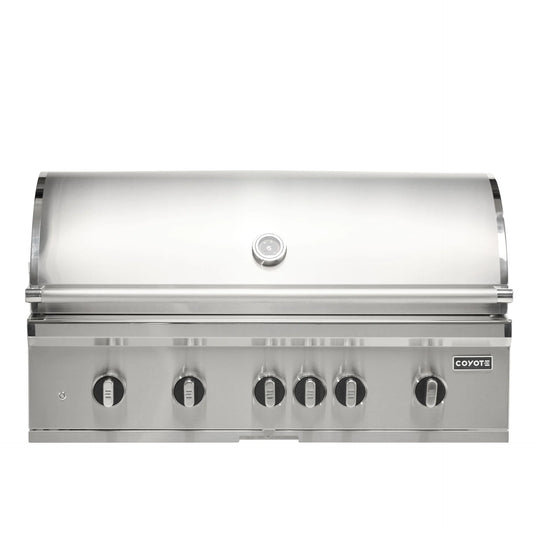
Illustration only — not to scale and not a specific product. Take every cutout and clearance from the installation manual for the exact model you are buying.
An outdoor kitchen island holds the built-in grill, the storage under it and the counter around it. The order you build it in matters more than the materials you choose: the grill decides the opening, the opening decides the frame, and the grill manufacturer's installation rules decide what the frame is allowed to be made of.
Quick answer: building a grill island
- Choose the grill first and get its cutout from the manufacturer — not from the grill's overall width.
- Check the manual for what the enclosure must be made of. Some brands require a non-combustible island; others allow a combustible frame only with their own insulated jacket, which makes the opening larger.
- Plan enclosure vents and the gas line before any countertop goes on.
Step 1: Choose the grill, then size the island around it
Everything else follows the grill. Get its cutout width, depth and height from the manufacturer's documents — our cutout dimensions by brand and model collects them — and then add room for doors, drawers, a side burner and landing space either side. If you are still choosing a size, start with what size built-in grill you need.
If you are replacing a grill in an existing island, the opening is already fixed, so work the other way round with the replacement grill finder.
Step 2: Decide what the frame is made of
This is a safety and warranty question, not only a durability one. Grill manufacturers write it into their installation manuals:
- Non-combustible islands only: Blaze states its grill "must be installed in a non-combustible enclosure only", TrueFlame says its grills require "a non-combustible island/enclosure", and American Made Grills' Estate manual says all BBQ islands must be made from non-combustible material.
- Combustible frames with a jacket: Alfresco, Artisan, Coyote, RCS and Summerset permit a combustible enclosure only when the manufacturer's insulated jacket (liner) is installed around the grill.
Two practical consequences. A jacket is a separate purchase, and it makes the required opening bigger — Alfresco publishes separate cutouts for the bare grill and for the grill in its jacket, and the jacketed opening is roughly 4 3/4" wider. Decide on the jacket before you frame, not after. Our guide to whether you need an insulating grill liner walks through it brand by brand.
Common frame options are masonry or concrete block, steel studs with cement board, and pre-built modular islands. Whatever you choose, confirm it meets the enclosure rule in your grill's manual.
Step 3: Plan vents, gas and power before finishing
Gas grill manufacturers require ventilation openings in the island enclosure so leaked gas cannot collect inside it — the size and number vary by brand (for example, Summerset specifies four vents of 10 square inches each and Coyote two of 20 square inches each). Where a propane tank sits inside the island, the manuals add further rules about isolating the tank area. Put the vents in the plan now; cutting them into a finished stone veneer is hard.
Run the gas line for the grill and any side or power burner, electrical for lights, refrigeration and outlets, and water if you want a sink. Gas and electrical connections should be made by licensed professionals.
Step 4: Add doors, drawers and the countertop
Access doors give you a way to reach the gas connection and shutoff under the grill, and drawers turn the rest of the cabinet into storage. Our doors, drawers and storage buying guide covers sizes and cutouts. Finish with a weather-resistant countertop — see best materials for an outdoor kitchen.
Frequently asked questions
How much does it cost to build an outdoor kitchen island?
It depends mostly on the appliances you put in it. Our outdoor kitchen cost guide prices three complete appliance packages from current Northwoods pricing.
Can I build a grill island myself?
Many people build the frame themselves. Hire licensed professionals for the gas and electrical work, and follow your grill manufacturer's enclosure, clearance and venting instructions — they are a condition of the grill's listing and warranty.
Can I put a cart grill into an island instead?
Sometimes the freestanding version uses the same grill head as the built-in, but what governs an island installation is the manufacturer's enclosure rules, not the cart. Read built-in vs freestanding grills before deciding.